


Reflections on the events in Israel – an Interview with Ayala Dekel, wife, mother, and head of BINA’s Secular Yeshiva
Marcie Yoselevsky, External Relations Associate at BINA speaks with Ayala Dekel, Head of the BINA Secular Yeshiva.
MY: Thank you, Ayala, for talking with me tonight and for sharing your thoughts and experiences with BINA’s friends here in Israel and abroad. Can you describe for us what life has looked like for you, both at home and at work, since Oct 7?
AD: In my personal life things changed immediately – my husband was called for army reserve duty that morning, on Oct 7. He left for the south of Israel where he is deeply engaged and completely immersed and communication with home is difficult. Since he entered Gaza we have had no contact. It is very hard and the worrying is constant.
My kids haven’t had a regular school routine since the war began. At the beginning, school was canceled completely. INow they have some days in person and some days on zoom. The way the schedule has worked out, I have had at least one child home every day since this began. You can imagine it is challenging for all of us – they miss the routine of school and I need to make adjustments to accommodate their being home.
At BINA, some of what we do has changed but it comes from the same places and energies and drive as always. Everything we do emerges from BINA’s mission to build connection, to bring meaning. To change things for the better. You see it and feel it when we lead Kabbalat shabbat for evacuated families from the north and south. In how we try our best to take care of our staff and those who need to feel connected to others. We have been holding staff meetings and gatherings, in person and via zoom, making sure we are checking in with our community, that we are there for each other and that our staff knows we are here for them.
MY: When you started to think about how BINA can help, what did you think BINA’s role should and could be in responding to this crisis?
AD: I knew that BINA’s strength is in connecting to emotional spiritual needs. Yes, we work also on the physical and in meeting physical needs – childcare, delivering supplies, helping wherever we can – our unique ability is to elevate the work with community, connection to Jewish stories, texts and experiences. When we think about what we can contribute, we look at our resources, our staff, and our community. We look at what we know how to do and what is needed.
That these horrible events happened on Shabbat adds a complication and a special kind of pain and challenge. How do we approach shabbat after this? The first shabbat, the second shabbat? How do we find our way back to some of the peace and joy of shabbat? What do we do with the horrible tainting of the beauty of shabbat? Everything that happened that day took something beautiful and hopeful, and changed it. It changed how people respond and relate to the day. Most of my family is observant, keeping shabbat. But since October 7th, on shabbat, many of them keep their phone on, close by. I also see how people react by needing shabbat more than ever. Needing the rhythm of the day, that gives structure to the week. Needing the opportunity to gather. To start each week anew. All of a sudden the weekly torah portions carry new meaning and urgency. We read stories of Jews dealing with hardships and making it through. We look for clues to how they persevered and overcame and learned to carry their pain.
MY: Could you share with us the story of a program you’ve led in these last weeks?
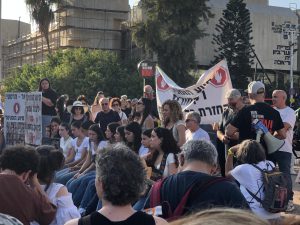
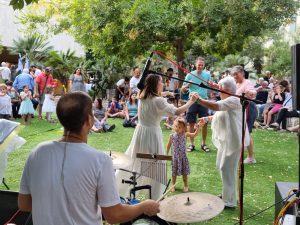
AD: I am still thinking about the Kabbalat Shabbat BINA led for those who evacuated from the affected communities in the south. How it felt like to pray and sing songs of joy and thanks, together. In this time of so much pain, finding the connections to thankfulness. The community came together with a Rabbi they had never met before and shared moments of beauty and intimacy. I’m thinking about how our texts and traditions create this power to connect. And this yearning I feel in so many of us right now to pray. Our Kabbalat Shabbat prayers of thanks were from traditional liturgy – hagomel – the prayer said after surviving a dangerous journey, from the songs of the Israeli musicians Meir Ariel and Naomi Shemer, and from the writings of poet Leah Goldberg.
I spoke afterwards with one of the mothers present, we talked about being thankful in this complicated time. For her, the words of our prayers helped draw her focus to chasing her children in the hallways of the hotel. To resolve their fights and argue with them about the small things. She spoke with me about the overwhelming feeling of gratitude for these small moments of normalcy.
This to me is the power of BINA’s work at this moment. We can be here for people in these times of crises with the gifts of our Jewish heritage, our stories and our texts, allowing people to see themselves in stories of our people overcoming hardship. Helping them to find their voice. Israelis need this now. I keep hearing and feeling from people I encounter that they feel a need to pray, they need a prayer they can connect with. They need a prayer that reflects them as they are in that moment. They need to be able to be angry, sad, thankful and anxious. And they need to be able to be ambivalent about prayer, question it, and explore it and connect with it in these ways.
MY: You speak so vividly of your experiences. What do you want someone who is not here in Israel to know?
AD: I want the BINA family, our community around the world, to know that we need them and we appreciate them. We need their support, their presence. We need them to say out loud, with all their strength, that they are in this with us and that we will endure together and that we will know better days. We can’t do this alone and it feels so good every time someone reaches out to us, when we hear our community speak up and speak out.
MY: Like you said, we can’t do this alone. Community helps. Connection, prayer, song, support. Alongside this, I’m curious what sustains you personally, in your work and in life with children at home and your husband in reserves?
AD: I am reading and writing a lot. I always do. I am reading daf yomi and parshat hashavua (weekly Torah portions) and books. I am writing to myself and to colleagues and I’m writing articles. Words are what is getting me through. And as I say that, I realize this too is a gift of our Jewish tradition. How do we handle things? Our history shows us that we read and we write and this is how we persevere.
Marcie Yoselevsky is a member of BINA’s External Relations team. Marcie moved to Israel three years ago. She has found and made her home in Tel Aviv. Marcie grew up in New London, Connecticut, and lived for many years in New York City, working in the Jewish and modern dance communities.
