
- All
- Social Action & Democracy
- Shabbat & Holidays
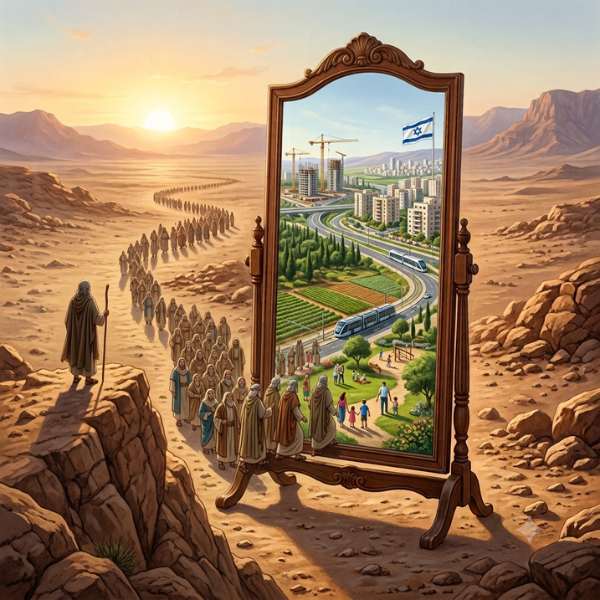
Looking Onward in the Same Direction – Parashat Re'eh | Ran Oron
"See, today I set before you blessing and curse." Moses stands before the people, they are facing the future and he is facing the desert, he will not be entering the promised land. "See today," he tells them. Re'eh, see, in the singular, not "see" in the plural, addressing them as though they were one person, as though speaking to each one individually. Re'eh, as if speaking to himself, knowing that what the heart sees, the eyes do not see. To see the future is to know how to choose. To choose, one must know how to remember, to recall, and to look back. […]

Until the Lord gives your brothers rest, as He has given you – Parashat Devarim | Rakefet Sholder
"Until the Lord gives your brothers rest, as He has given you, and they too take possession of the land… then each of you may return to the inheritance that I have given you." (Deuteronomy 3:20)
The portion of Devarim is always read close to Tisha B'Av. From ancient times until today, this period has been one of national reflection and soul-searching. […]
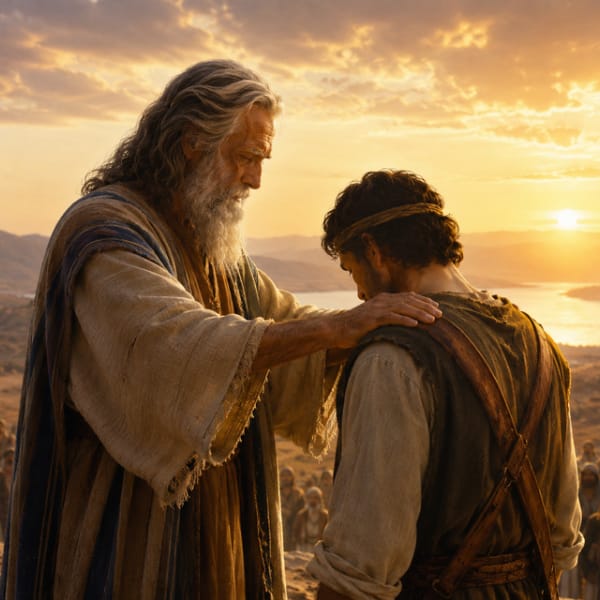
Parashat Pinchas, On the Eve of Elections | Gabi Barzilai
Are we shaping the future, or recycling the past? As elections approach, Parashat Pinchas pushes us to rethink leadership and what real change demands. […]
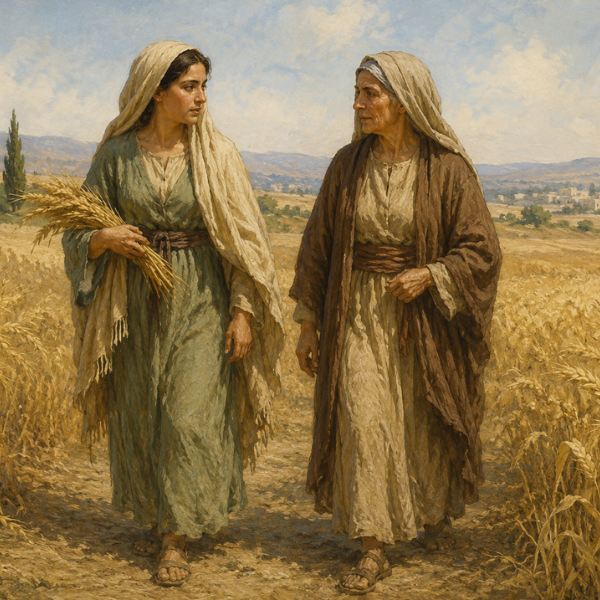
Entrance Gate to the People – Israeli Conversion | Yuval Linden
At the end of the nineteenth century, as many European nations underwent processes of national revival, Jews too were compelled to re-examine the essence of their collective identity. This awakening was not only a response to persecution and exclusion, but a deeper search for a renewed identity, one that would integrate an ancient heritage with the modern needs of a community redefining itself. […]
The Shadow of Everywhere – Parashat Vayikhal | Ran Oron
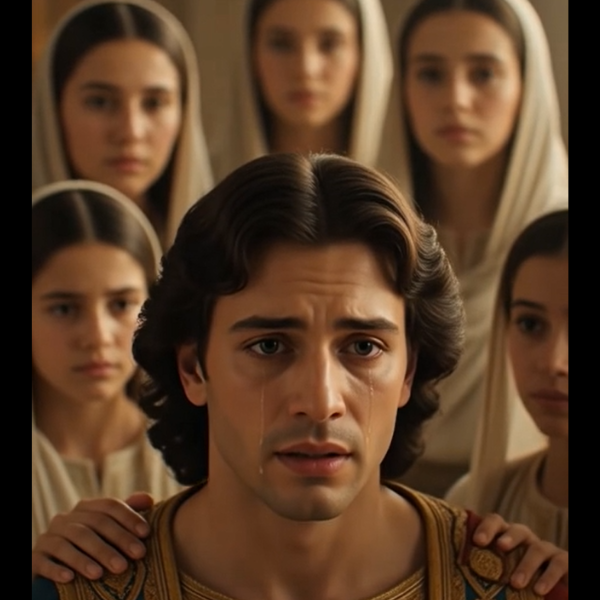
Seven times Joseph weeps, more than any other person in the Torah. He does not cry when he is thrown into the pit, nor when he is sold to the Ishmaelites. He does not weep when cast into prison, nor when betrayed by his companions there. He does not weep from happiness at his success. Seven times he weeps, but only in his encounters with his brothers, with his father, in the presence of, or facing, his family. […]
The Storm Touches the Eyelashes – Parashat Miketz | Ran Oron
Seven times Joseph weeps, more than any other person in the Torah. He does not cry when he is thrown into the pit, nor when he is sold to the Ishmaelites. He does not weep when cast into prison, nor when betrayed by his companions there. He does not weep from happiness at his success. Seven times he weeps, but only in his encounters with his brothers, with his father, in the presence of, or facing, his family. […]

Parashat Lech Lecha | Ran Oron
What is the meaning of “Lech Lecha”? Is it the way to fulfill one’s destiny? Is it a call to go to the one place where you truly belong, or to search for the place where you will become who you are meant to be? Is it the path of reason, or perhaps the way of the heart? Or is it the essence of the connection between them? From where does a person draw the strength to set out without asking why, when no clear destination is in sight? […]

A Tale of Two Mountains – Parashat Ki Tavo | Ran Oron
A “chosen nation” not in the sense of being an elevated nation, but because they knew how to realize the right of choice. "The Torah went among all nations", tell us our sages, "it came to Esau and was rejected, to Ishmael and was not accepted, to Ammon and Moab and was refused, until it came to Israel. They said in unison: 'We will obey and listen'". They chose the path of the divine morals […]

In the Place We Are Right – Parashat Korach | Ran Oron
The poetry of the Sons of Korach and Samuel's gentle and wise determination are a testimony to the nature of “the tikun” that takes place after a fall, one that comes in the wake of a bold but failed attempt to change reality. A demand for change in general, and for change in social order in particular, if its source is in pride, excessive self-confidence, jealousy and the sin of arrogance, is doomed to failure. True change originates from a world of doubts, listening and love. “The tikun” will come from a courageous place of regret and taking responsibility, of faith in the power of truth and spiritual heritage. The beauty of the fall is that it is not an end, but a phase, an opportunity and a necessity on the path to inevitable “tikun”. […]

For Whom the Bells Toll – Parashat Tazria-Metzora | Ran Oron
The Torah portions of Tazria and Metzora are read as a single portion in non-leap years and deal mostly with the disease of leprosy. Despite being portions that deal with impurity and illness, Parashat Tazria opens with the purification ritual for a woman who has given birth, an event of renewal and birth. A surprising opening that suggests perhaps within the heart of illness, difficulty, and pain, the key to renewal can also be found. […]

Reflections on the Passover Seder for 2025
This year, we invited different BINA educators to share their reflections on different parts of the Passover seder. Each educator chose a different passage from the Haggadah and shared their thoughts on the passage, reflecting on personal experiences and contemporary realities. We invite you to explore these reflections to add meaning to your seder or Passover holiday. […]

A Nest of My Prayers – Parashat Vayakhel | Ran Oron
Who is “the angel who has redeemed me”? Is it the same angel with whom Jacob wrestled, before earning the name Israel? Did he miss or remember him? How will the angel bless the boys from all evil? And why the Divine Presence does not allow Israel to foresee the future of his loved ones? […]

Parashat Ki Tisa: Leadership, Freedom, and the Golden Calf
Parashat Ki Tisa presents one of the most dramatic moments in the Torah—the sin of the Golden Calf. In this pivotal event, two leaders stand before us—Moses and Aaron—each embodying a different style of leadership, each with a distinct perspective on the relationship between a leader and the people. […]

Parashat Vayechi – Jacob’s New Angel | Ran Oron
Who is “the angel who has redeemed me”? Is it the same angel with whom Jacob wrestled, before earning the name Israel? Did he miss or remember him? How will the angel bless the boys from all evil? And why the Divine Presence does not allow Israel to foresee the future of his loved ones? […]

Study Guide: Limmud to Commemorate October 7
As we commemorate October 7, we hope this study guide will provide you with some helpful tools (to use on your own or in a group) for learning, exploration, reflection, connection and peace. […]

Like a Flute Accompanying the Singing – Parshat Va’etchanan | Ran Oron
At the beginning of the parasha Moses tells the nation how God refused to hear him. Later he will ask them to hear and listen to him, he will repeat the Ten Commandments to them and remind the people in front of him how their hearts did not have enough faith and love to hear and listen to God. Their disbelief, causing him to be a mediator before God for forty years in the desert, exhausted him. […]

Perseverance and Endurance – Marcie Yoselevsky
The long days of summer have somehow added up to short months and we are approaching a year since the events of October 7. In the midst of this time of tension and pain, we encounter Tisha B’Av. Marcie shares her reflections on Tisha B’Av and how the day feels this year. […]

Sorrow & Hope: A Study Guide for Tisha B'Av and Tu B'Av
In this complicated time, we hope this study guide will provide you with some helpful tools (to use on your own or in a group) for learning, exploration, reflection, connection and peace. […]

The Garden Was There. Not Eden – Parashat Shelach
Spies or messengers? Full of promise or impending disaster? In this week's parasha, BINA guest writer Ran Oron explores the story of those sent ahead to gather information on the promised land. How do we understand the message of their story in their time and in ours? […]

Your people are our people and we are your people: Article for Shavuot / Gili Dvash Yeshurun
Gili Dvash Yeshurun takes a look at Megillat Ruth and sees the parallel between Ruth’s experience finding her footing as a displaced person and how her community helps her gain a sense of belonging. This Shavuot, how will holiday celebration traditions be maintained, evolve, or change? […]
