


Parashat PinchasPinchas, On the Eve of Elections
In just a few months, Israel will head to the polls, and the campaign is already well underway. Worthy candidates, and others less so, are presenting themselves while attacking their rivals. Most parties are repeating the same messages, recycling familiar slogans and, all too often, presenting the same candidates. There are a few new faces, but rarely in positions where they can truly lead. It is worth asking: Are these the elections we want? Has the time not come for a profound renewal of our political system, for a genuine generational transition in leadership and a deep cleansing of our public institutions?
The Torah portion of Pinchas begins where the previous one ends, with the dramatic appearance of a bold young leader, Pinchas son of Eleazar. Most of the parashah consists of administrative matters – a census of the Israelites in preparation for entering the Land and detailed lists of the sacrifices for the festivals. Nestled within these technical sections, however, are two remarkable narratives. One is personal and the other national. We see the daughters of Zelophehad demand access to their father's inheritance in the Land of Israel and Joshua is appointed as Moses' successor.
At first glance, these two stories seem unrelated, and certainly disconnected from our upcoming elections. Yet the sages taught us the principle of semikhut parashiyot: that the juxtaposition of biblical passages invites interpretation and deeper meaning. Although the classical rabbis did not connect these two episodes, the gates of interpretation are never closed. We may therefore offer a contemporary midrash.

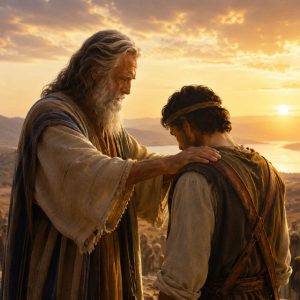
Why is the appointment of Joshua placed immediately after the story of the daughters of Zelophehad?
Because when Moses saw the daughters of Zelophehad rise and claim what was rightfully theirs, declaring, "Give us a holding among our father's brothers", and when he saw that God affirmed their claim, saying, "The daughters of Zelophehad speak rightly," Moses understood that something fundamental had changed.
He saw the difference between the generation that left Egypt and the generation destined to enter the Promised Land. The first waited for redemption; the second took responsibility for shaping its own future. The former embodied "sit and refrain"; the latter, "rise and act." Emphasizing this new mentality, even the women of this new generation stood up with confidence, demanded justice, and proved themselves aligned with the divine vision.
At that moment, Moses said to himself: My time has passed. My mission is complete. I belong to the generation of the Exodus. This new generation requires a different kind of leader.
So Moses prayed: "May the Lord, God of the spirits of all flesh, appoint someone over the community, one who will go out before them and come in before them, who will lead them out and bring them in, so that the congregation of the Lord will not be like sheep without a shepherd."
God answered: "Take Joshua son of Nun, a man in whom there is spirit, and lay your hand upon him."
Joshua was the leader worthy of the new generation, and the new generation was worthy of him.
Moses appointed Joshua as his successor, ascended Mount Abarim, and there his life came to an end.
May we, too, be blessed with leaders who are worthy of us, and may we be worthy of them.
Written with the assistance of Gabi Barzilai
